Iron-Air Batteries

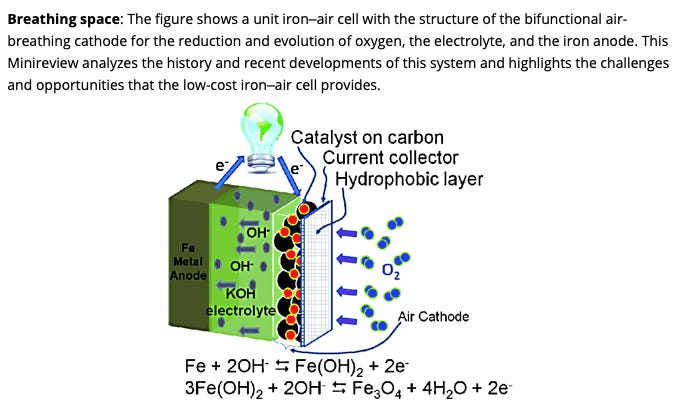
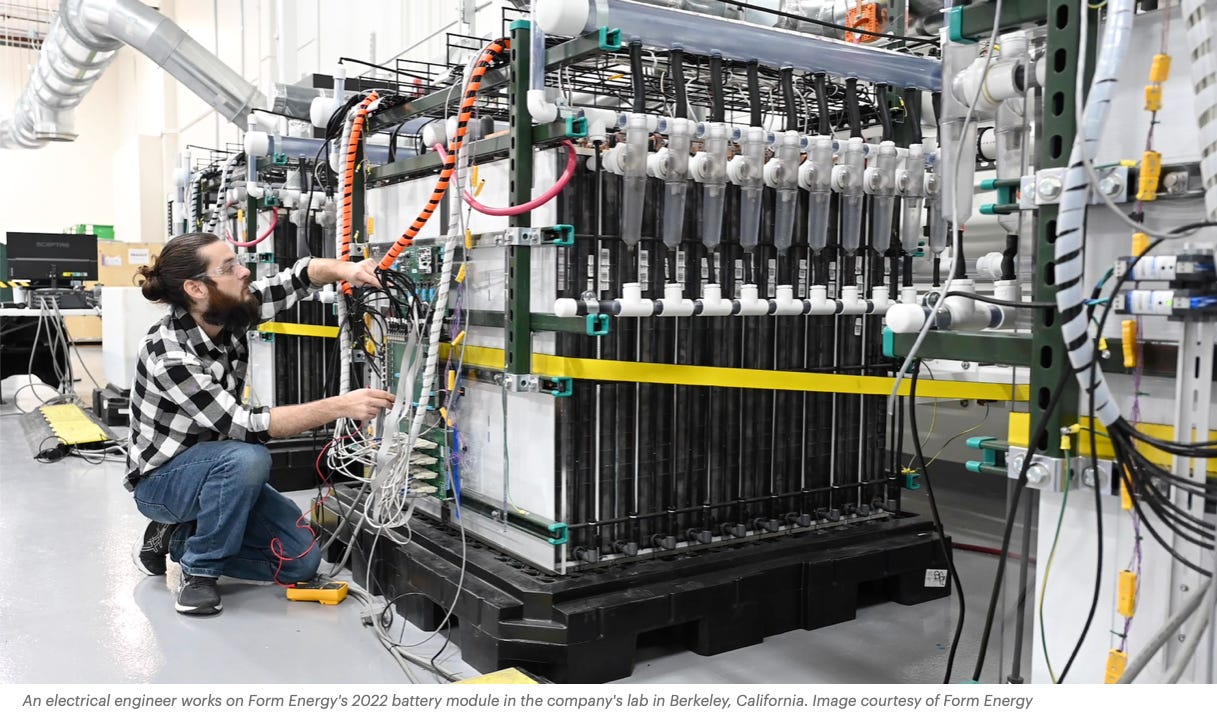
CleanTechnica: "Coal state sells coal-killing, iron-air energy storage to other states." Ironically, public officials in the iconic coal-producing state of West Virginia "love to rant against renewable energy investing, while the other hand [have] loaded up a $290 million incentive package to reel in the Massachusetts-based US energy storage startup Form Energy." The company is setting up its first factory in West Virginia, for the mass production of long-duration, iron-air batteries that will finish off the coal-burning generators. "The US Department of Energy has been on the prowl for new, long duration energy storage technology that can deliver at least 10 hours of electricity, on up to full days and more." A grid 'saturated' with wind + solar will benefit from more hours of storage to 'ensure reliability + stability' of the grid. Form Energy has engineered a scalable approach on modules the size of a large garage freezer, as seen in one of the photos. "A module is packed with about 50 cells, each of which contains the iron and air electrodes along with a non-flammable electrolyte [potassium hydroxide, or KOH], similar to those used in AA batteries. For the chemists among you, the powdered iron supported by a mesh constitutes the anode of the battery, on the left side of the graphic. Oxygen reaches it after traversing a semipermeable membrane, causing rusting, an exothermic reaction used to put electrons into motion along a circuit. To discharge the battery they give it oxygen + get out electrons. To charge the battery they give it electrons + get out oxygen.The Weirton, WV iron mill will have 3 megawatts [MW] of power, with a run time of 100 hours, at about a tenth of the cost of a lithium battery, which will accelerate the decommissioning of coal-buring power plants around America. Gives new meaning to the concept of the Rust Belt.