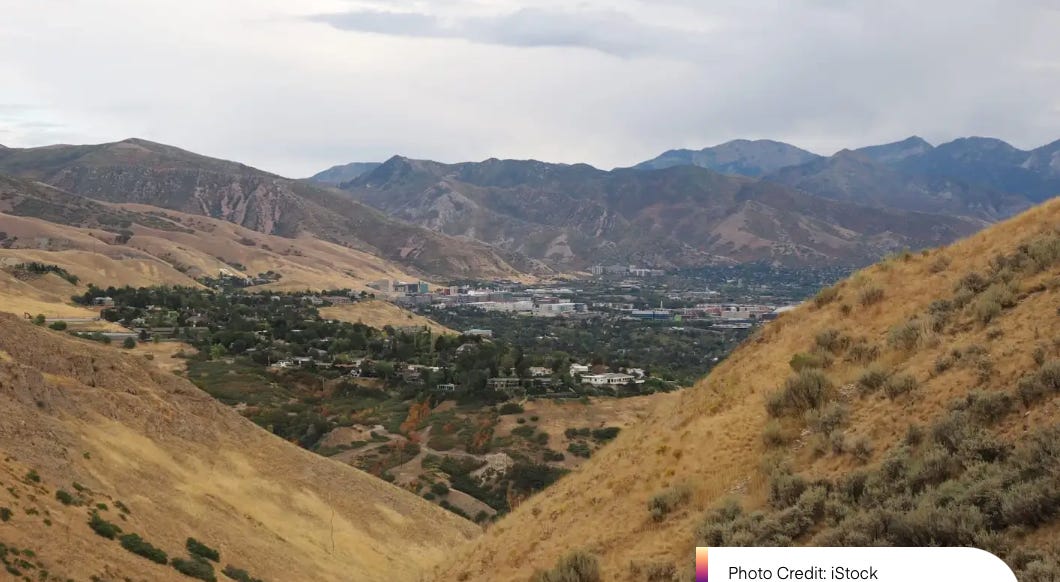
Utahn Desiccation

TheCoolDown: “Experts sound alarm as ‘unprecedented’ phenomenon unfolds across US: ‘We’re closer to the edge … than we realize.’” Snow droughts in Utah could impact how much water is available in 2026. “Utah tends to get an average of 275 inches of snow a year, but this winter has seen a 25-year low of snowfall.” That low currently stands at 44% of normal. To belabor the obvious, it’s not just skiers + other winter sports fans who are impacted by the warmer weather—it could have a serious impact on water supplies. Lake Powell and Lake Mead, the country’s two largest reservoirs, rely on melted snowpack to provide water to 40 M Americans. “According to the Colorado River Research Group, even a near-average snowpack over the colder months could mean that these reservoir water levels could drop to a record-low in 2026.”
Slowing recovery, dry soils near Lake Powell in particular will likely soak up a lot of water before it reaches the water system. “Three-quarters of the water usage in Utah goes towards agriculture, so low levels and potential droughts could have a severe impact on food systems, farmers’ income, and the economy as a whole.” Some households on private water systems may open dry taps at some point. Crops will suffer. Wildfires will be an increasing risk. I’m going to have to remember the phrase “snow drought,” + incorporate that into my vocabulary. A social construct, not a meteorological definition, but still evocative.